
Maternal Infant Health Program
Maternal Infant Health Program (MIHP) promotes healthy pregnancies, positive birth outcomes, and healthy infant growth and development with the long-term goal of reducing infant mortality and morbidity. Nurses and social workers provide professional case management and health education services, promote health equity, and provide individualized care to pregnant people, infants, and their caregivers. Families enrolled in the program may also be referred to or receive home visits from a registered dietitian, International Board Certified Lactation Consultant, and/or infant mental health specialist.
What is the model’s approach to providing home visiting services?
Home visits take place monthly or more often if needed. Services are provided prenatally and may last until the child is 18 months old, based on the needs of the infant and caregiver.
MIHP’s service population includes the following:
- Infants in the first 18 months of life eligible for Medicaid
- Pregnant persons eligible for Medicaid
Who is implementing the model?
Home Visitors
MIHP was implemented by 288 full-time equivalent home visitors in 2025. The model requires home visitors to be registered nurses or licensed social workers. Registered nurses must have at least 1 year of experience providing community health, pediatric, or maternal/infant nursing services. Licensed social workers must have at least 1 year of experience providing social work services to families. Others providing services in the home may include licensed professionals with an infant mental health specialist endorsement; licensed nurses and social workers with valid, current certification as International Board Certified Lactation Consultants; and registered dietitians with a physician’s order.
Supervisors
MIHP was implemented by 72 supervisors in 2025, with at least 1 supervisor covering each of the 69 local agencies.
Where is the model implemented?
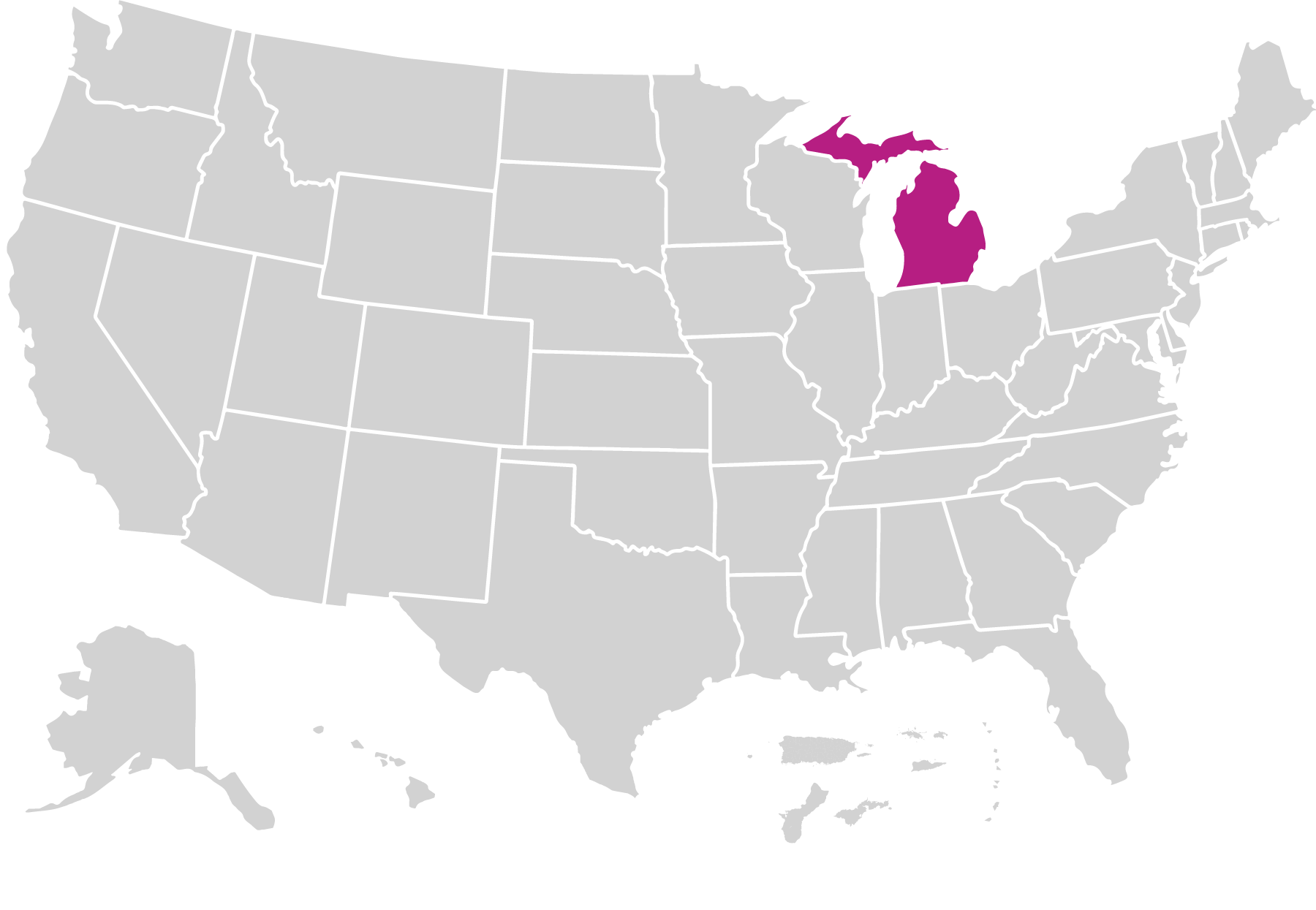
MIHP was implemented by 69 agencies in 100 locations in 1 state in 2025.
Families Served Through Evidence-Based Home Visiting in 2025



Race
<1% American Indian Alaska Native
3% Asian
38% Black
<1% Native Hawaiian Pacific Islander
31% White
4% Multiple
22% Another race
Ethnicity
14% Hispanic or Latino
86% Not Hispanic or Latino
Primary language
90% English
6% Spanish
4% Another language
Caregiver age
13% ≤21 years
45% 22-29 years
42% 30-44 years
<1% ≥45 years
Caregiver education
20% No HS diploma
65% HS diploma or GED
8% Some college or training
7% Bachelor's degree or higher
Household income
100% Low-income status
Child age
61% <1 year
39% 1-2 years
<1% 3-5 years
Child insurance status
100% Public