
Mother measuring daughter's height and marking it on wall at home.
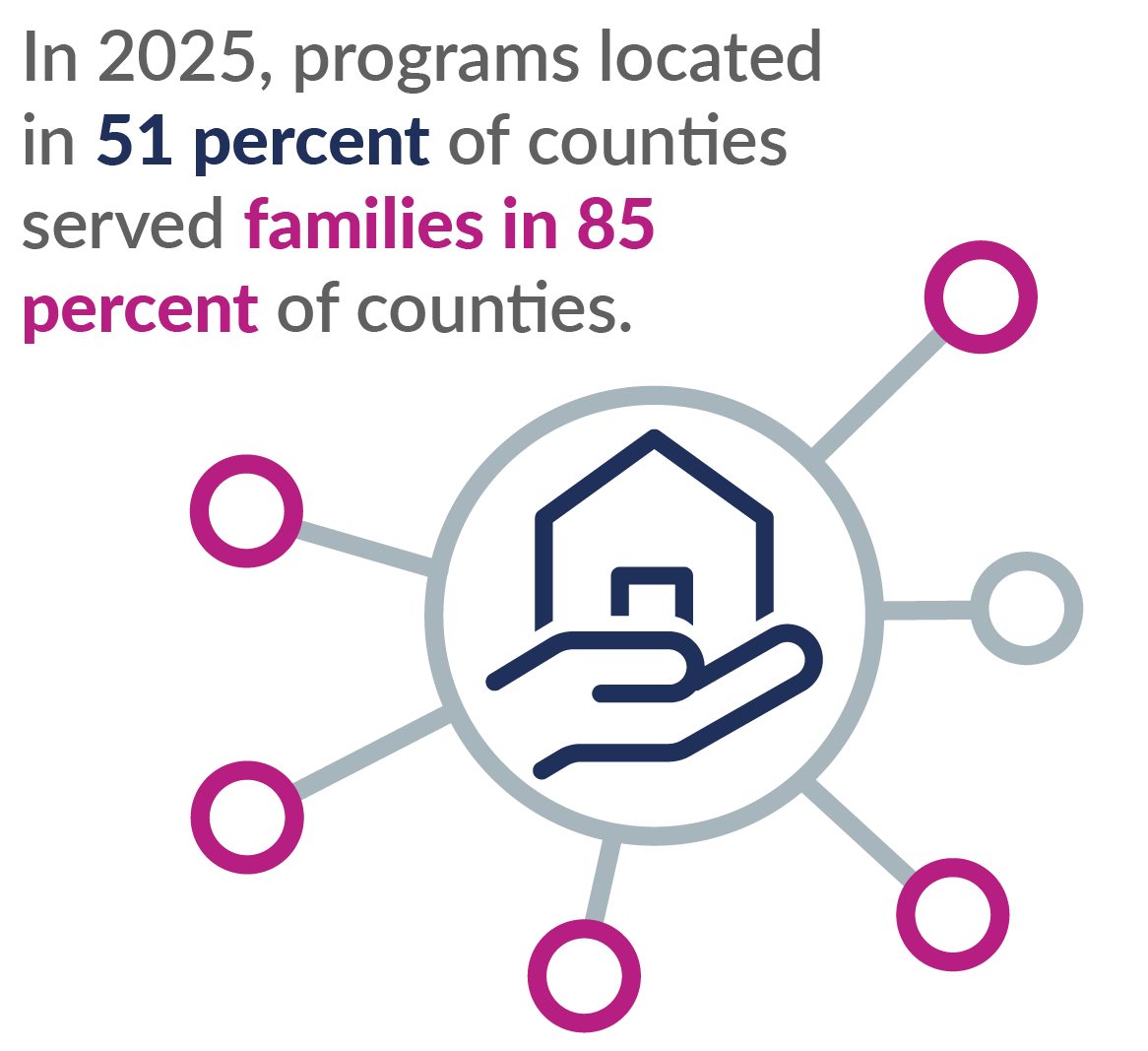 Evidence-based home visiting programs have operated in all 50 states, the District of Columbia, and 5 U.S. territories for more than a decade—providing the local infrastructure for home visitors to serve families in nearby communities. Because service areas typically expand beyond a program’s physical location, examining where families receive services provides a fuller picture of home visiting’s reach and ability to serve families in communities that may lack access to services.
These insights build on national data about the location of home visiting programs by examining where programs are physically located in combination with the families they serve, providing an expanded look at home visiting’s reach and ability to serve communities in need of resources.
Insight 1. Home Visiting Services Reach Families in High-Need Communities Beyond Program Locations
Home visiting can be an important support for families living in areas with fewer resources—such as rural counties, maternal care deserts, and counties with very low access to health resources.
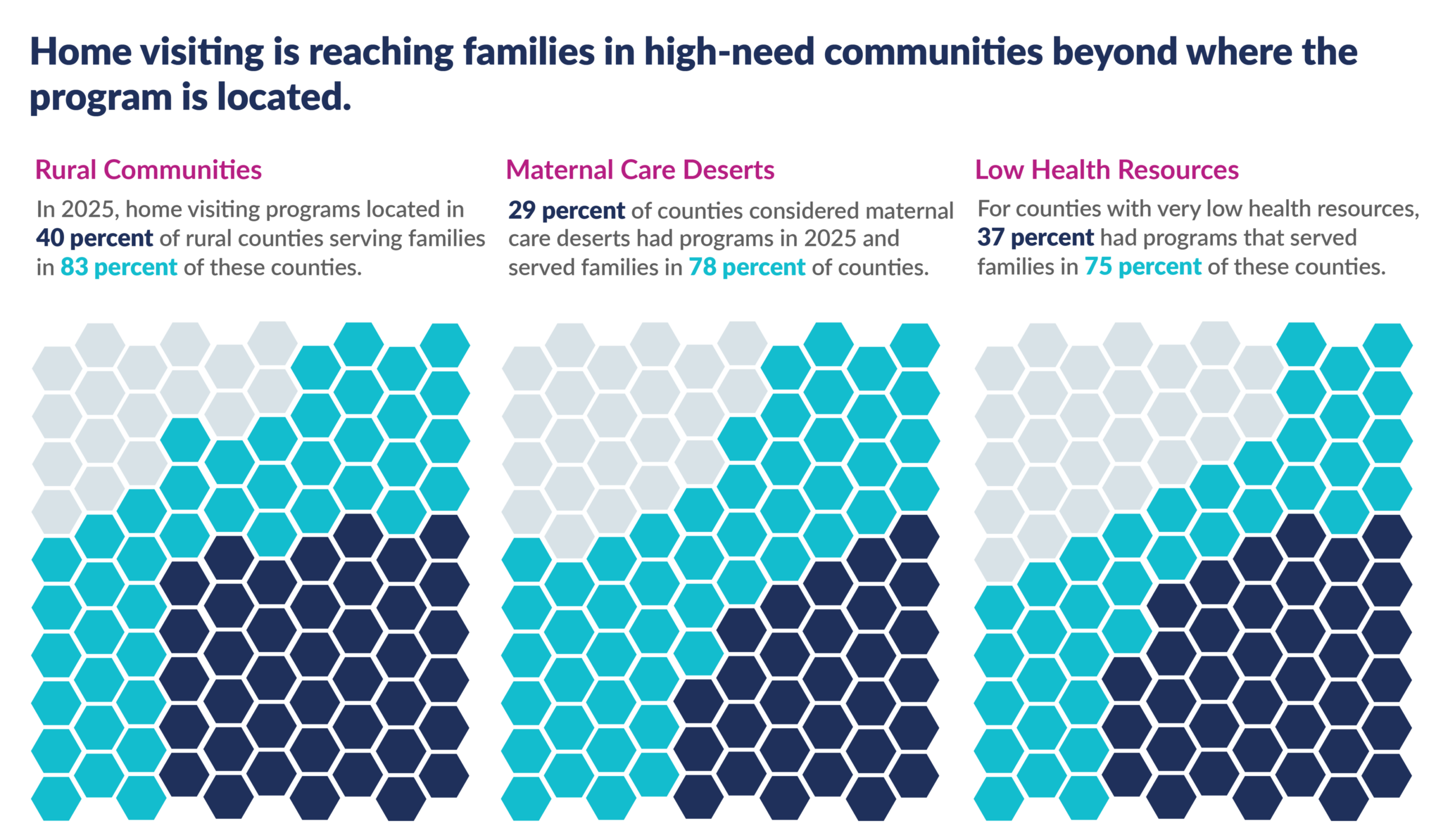
These indicators suggest that home visiting reaches communities where families may otherwise face barriers to health care access, especially when considering program locations and service areas.
Insight 2. Home Visiting Reaches Families Most Likely to Benefit From Services Based on Their Demographic and Socioeconomic Characteristics
As home visitors serve communities beyond their program locations, they reach families whose demographic and socioeconomic characteristics point to the potential benefits of additional support. This includes children living in areas with high rates of poverty, infants with low birthweight, and uninsured families.
As intended, home visitors served families in the areas surrounding their program locations, ultimately reaching a larger geographic region.
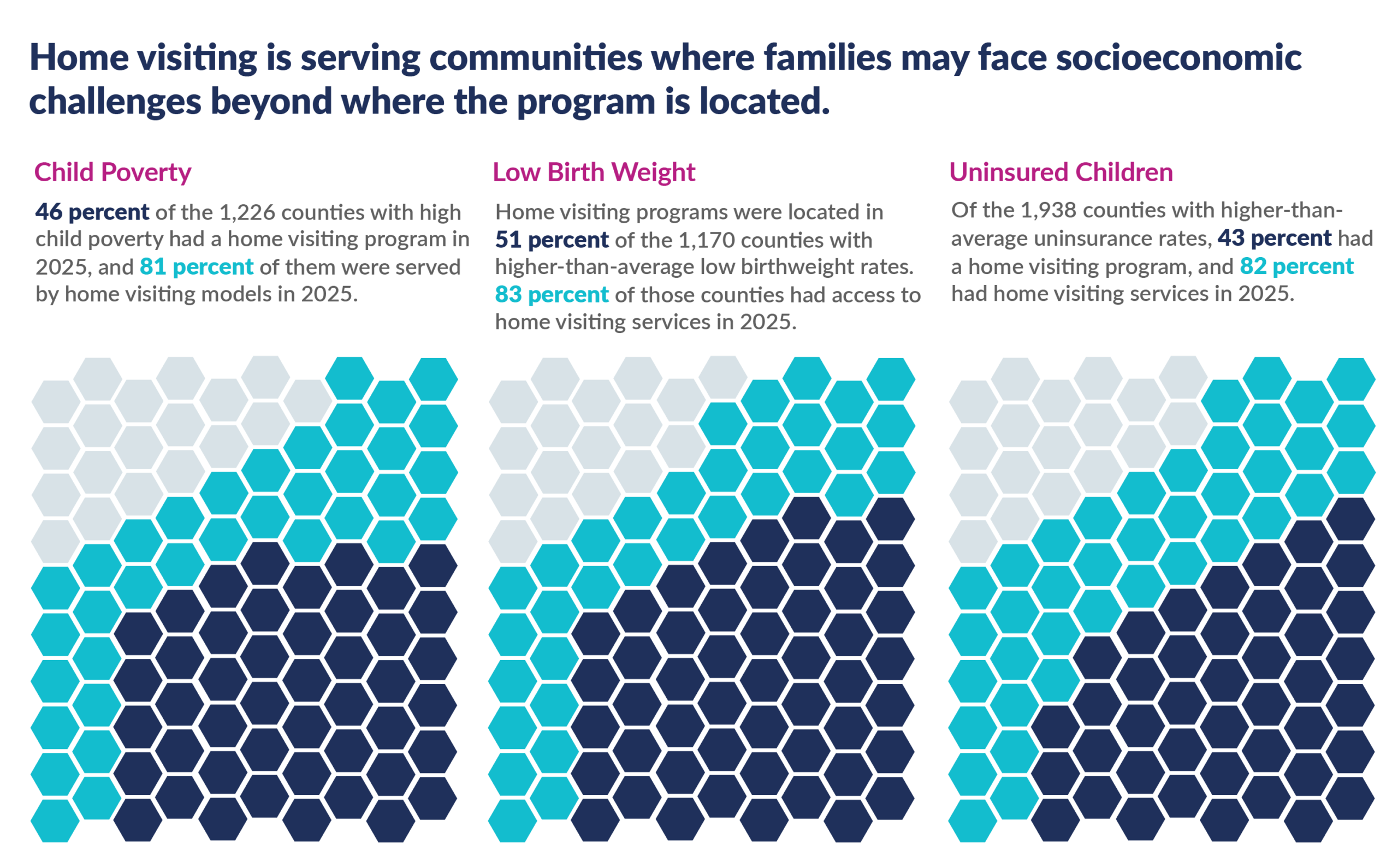 Despite these findings, service gaps persist, underscoring opportunities to reach more families in underserved communities.
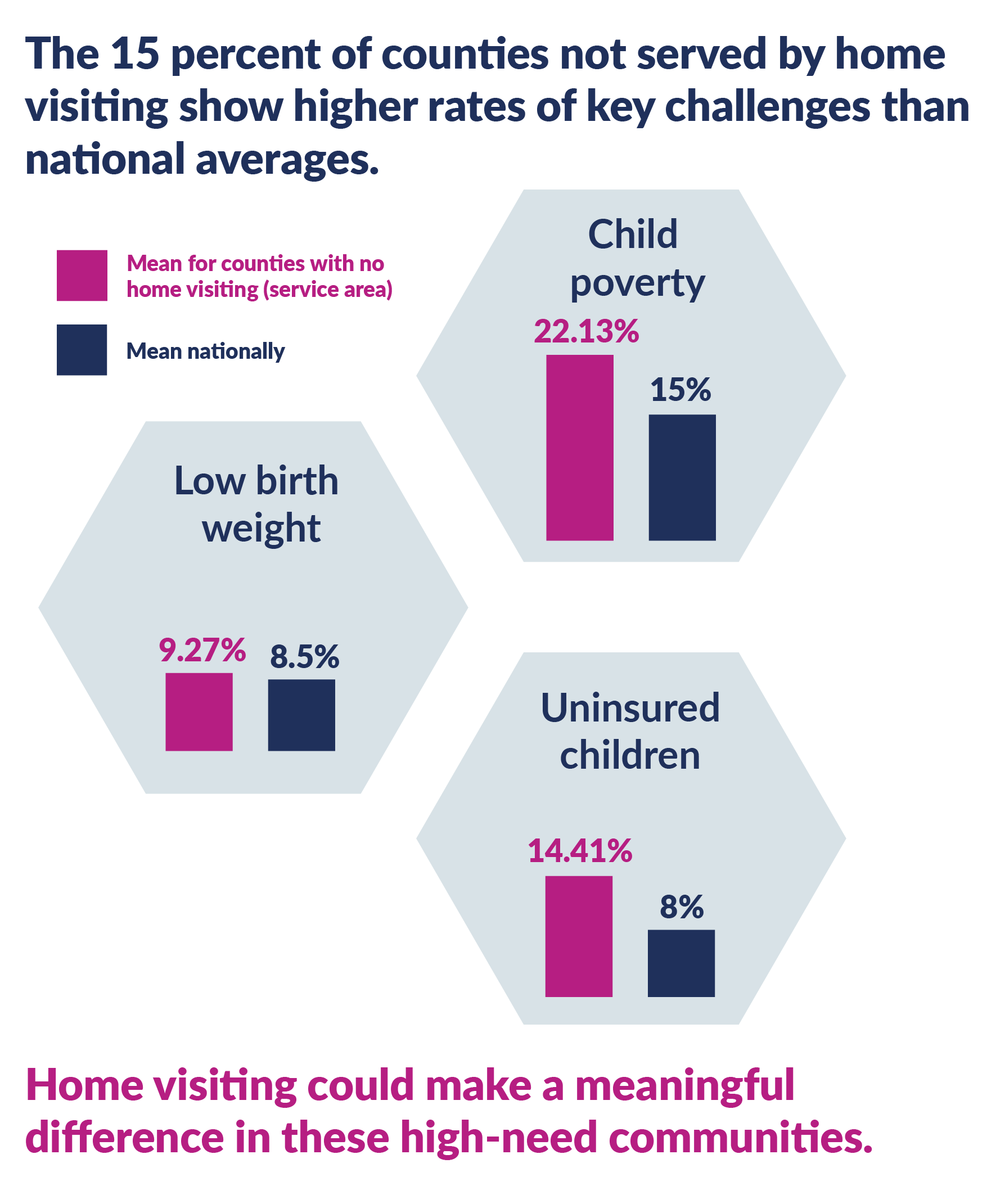
Insight 3. Although Home Visiting has a Wide Reach, There Are Still Communities and Families in Need That Could Be Reached
Many high-need communities are being reached by home visiting; however, 15 percent of all counties still lack access to home visiting services. Notably, counties without home visiting show higher rates of challenges—such as low birthweight, child poverty, and uninsured families—than national averages, indicating that some high‑need areas remain unserved and could benefit substantially from expanded access.
Conclusion
Home visitors work beyond their program locations to meet families where they are, often supporting families with limited access to resources. Although the field serves a high percentage of counties nationwide, home visiting models and agencies can continue to expand services into areas with no access. Priority areas might include communities with high rates of child poverty and uninsurance and those in rural areas. Expanded geographic reach comes with real demands, as home visitors may need stronger financial and logistical support to serve communities far from program sites.
Discover more amazing content