
Mother measuring daughter's height and marking it on wall at home.
When the NHVRC debuted the Home Visiting Yearbook in 2017, it marked the first time bringing together national home visiting data across models and funding streams. The field could see who was being served, where services were delivered, and the extent of its potential reach—all in one place. Just as home visiting has grown and diversified since that inaugural publication, we have expanded data collected for the yearbook to reflect the changing field. Examples include adding new models, documenting changes in service delivery, and providing insights about the communities supported by home visiting services.
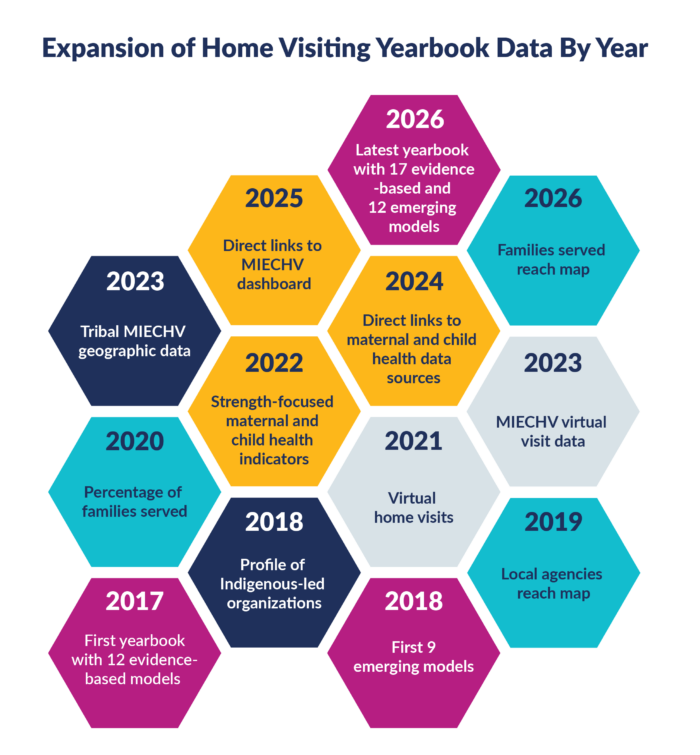
This broader data foundation has strengthened what we know about home visiting’s impact. It has also revealed emerging trends, highlighted areas of priority, and offered a clearer view of how the field is adapting to meet families’ evolving needs. The following insights draw on a decade of coordinated national data to show how the home visiting landscape has shifted, and what those shifts mean for the future of the field.
Insight 1. More Models Means a More Complete Picture of Growth
A decade ago, the landscape depicted in the first NHVRC yearbook looked very different, featuring data from 12 evidence-based home visiting models. The upcoming 2026 yearbook will include 25 evidence-based and emerging models—more than double the original number—reflecting the field’s growth and strengthened capacity to collect and share information. Expanded model participation in yearbook data collection allows us to see patterns previously hidden and strengthens the overall picture of home visiting across the country.
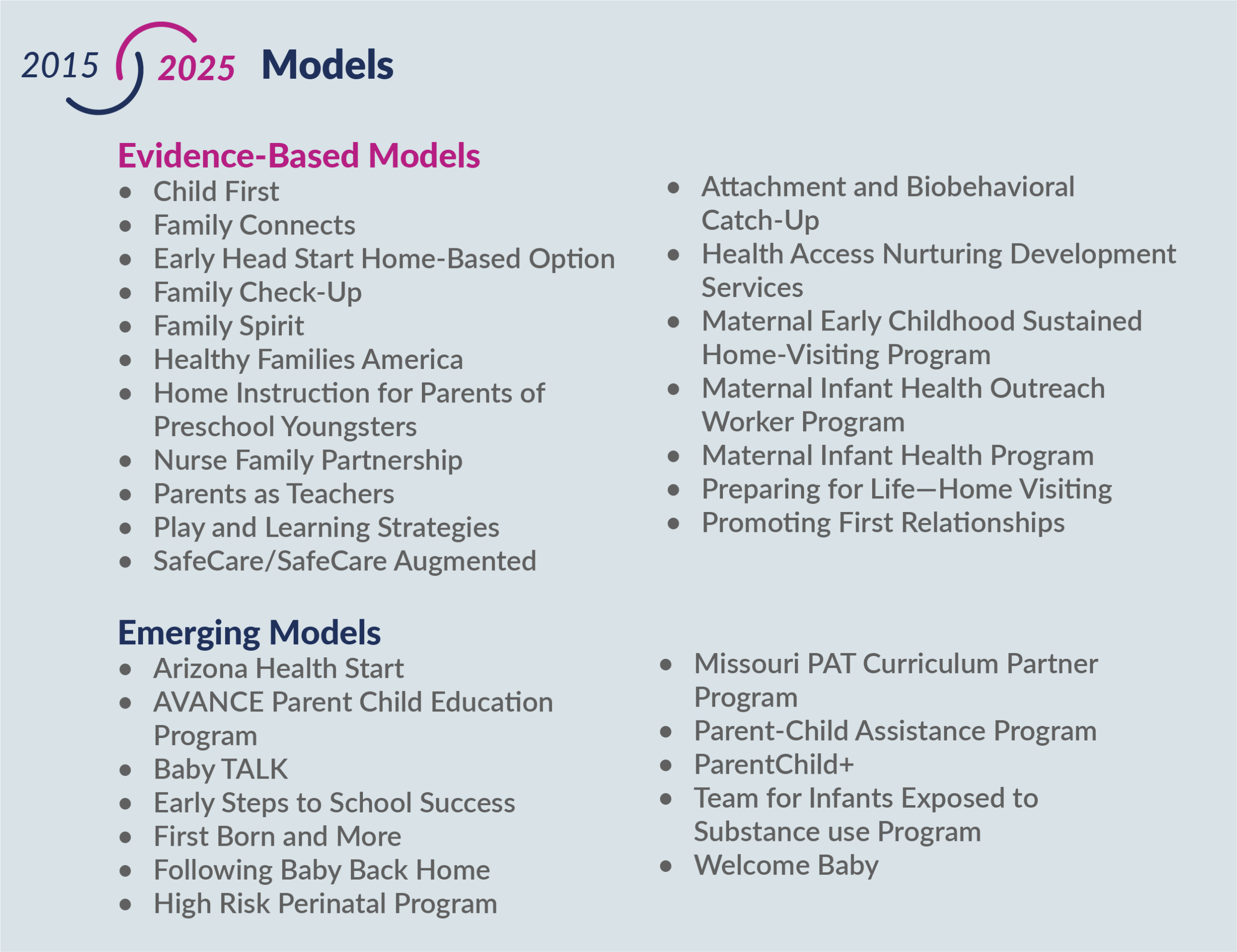
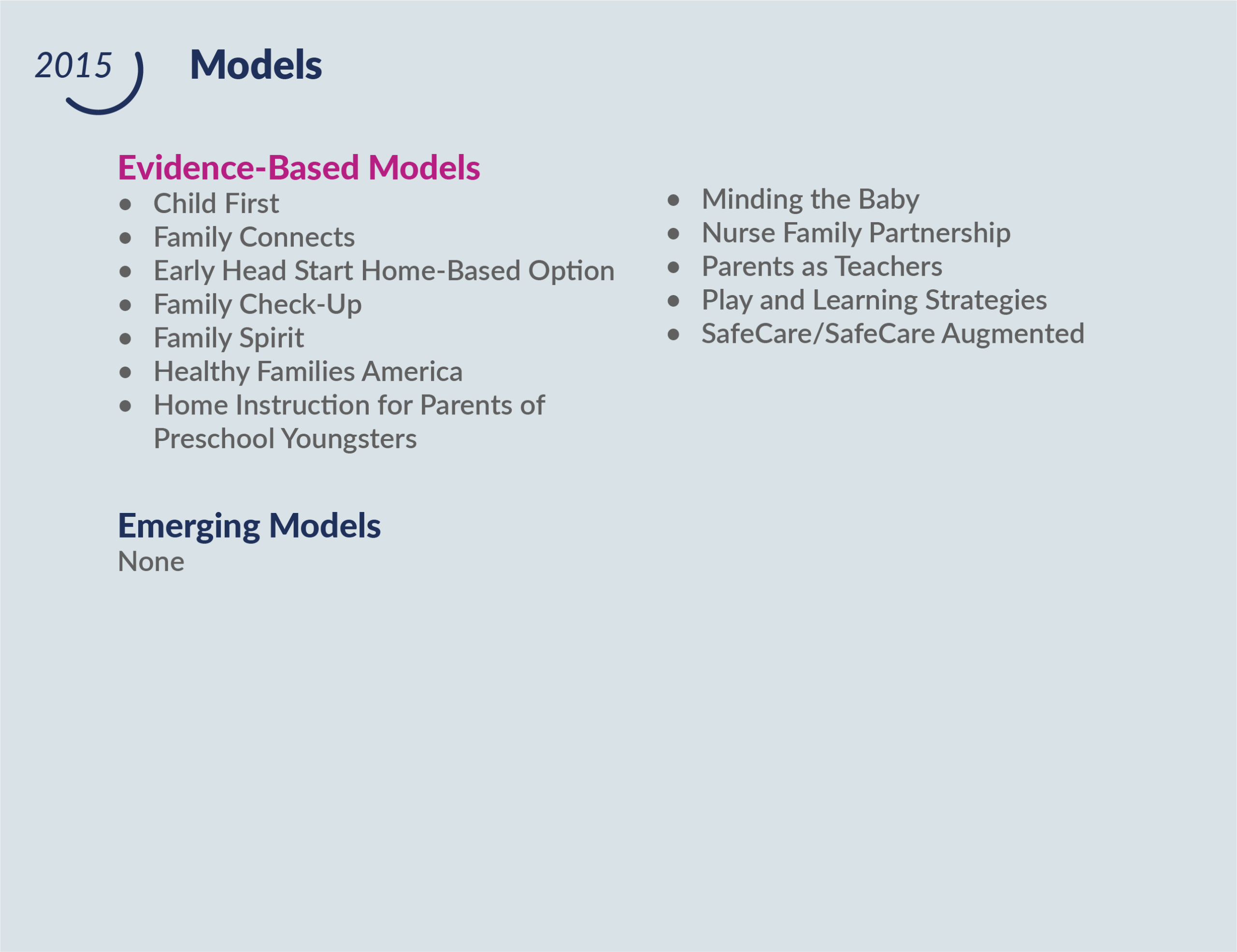
The increase in participating models also highlights two important shifts in the field. First, more models have met evidence-based standards, adding to the that home visiting improves outcomes for children and families. In 2015, 13 evidence-based models were operating in the United States; by 2025, 6 more models had been designated as evidence based. Second, including emerging models in data collection added insight into families and communities not served by evidence-based models alone. Since we first added emerging models to the yearbook in 2018, 12 emerging models have shared their data with us. These emerging models continue to build evidence while providing valuable information about reach and services.
 While the comprehensive picture of home visiting presented by the yearbook is still not fully complete, the increase in model data over the past decade gives us a far richer foundation for understanding the field’s evolution. And because each model varies in its approach, including more options gives states and communities a stronger chance of finding the model that best fits their families’ needs.
Takeaways
- More models are contributing data to the Home Visiting Yearbook, giving us a more complete, though still evolving, picture of the national home visiting landscape.
- More models have met evidence‑based standards, expanding the research base on how home visiting improves outcomes for children and families.
- Emerging models add important insight into home visiting reach and implementation, especially in communities and settings not included in evidence‑based model data.
- States and communities now have more home visiting model options to choose from, allowing them to select the model that best fits their families’ needs.
Insight 2. Federal Investment and Data Infrastructure Have Supported the Expansion and Visibility of Tribal Home Visiting
Over the past decade, tribal home visiting has gained visibility, resources, and recognition as a critical part of the national home visiting landscape. Increased federal investment, most notably the doubling of the Tribal MIECHV set‑aside from 3 percent to 6 percent, has strengthened culturally grounded services in Indigenous communities and supported expansion in historically underserved regions. These investments have helped tribal programs deepen their work with families, sustain culturally rooted practices, and build the infrastructure needed to deliver high‑quality services.
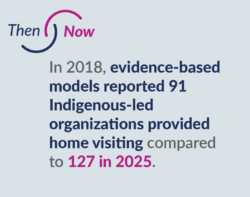 We have similarly expanded yearbook data collection to better reflect this growth. In 2018, for the first time, four models reported on programs led by Indigenous organizations. Nine models provided information about 127 Indigenous-led home visiting programs for 2026, allowing for a clearer understanding of how home visiting is being implemented in Native communities and how Indigenous organizations are leading the work.
Takeaways
- Increased Tribal MIECHV funding has strengthened culturally grounded home visiting services and supported expansion in historically underserved regions.
- New reporting about Indigenous‑led programs provides a more accurate and inclusive picture of how home visiting is implemented in Native communities.
- Tribal home visiting supports cultural revitalization, community connection, and holistic well‑being, including practices such as Indigenous food sovereignty.
Insight 3. Technology Continues to Shape How Home Visiting Reaches Families
Long before the COVID‑19 pandemic, home visiting programs were using technology to reduce barriers to services. In 2017, many programs, including those serving rural communities and military families, were experimenting with virtual visits and telehealth to overcome challenges such as geography, transportation, and scheduling. These innovations demonstrated how technology could help families stay connected to support when in‑person visits were difficult.
The pandemic dramatically accelerated this trend. When COVID‑19 disrupted in‑person services in 2020, programs rapidly shifted to virtual service delivery to maintain continuity of care. Models and states began collecting data on virtual visits, and the 2021 yearbook included national virtual visit data for the first time. At the height of the pandemic, virtual visits accounted for approximately 70 percent of all home visits—a level of virtual engagement the field had never seen before. As in‑person services resumed, the proportion of virtual visits declined, falling to less than 15 percent by 2025.
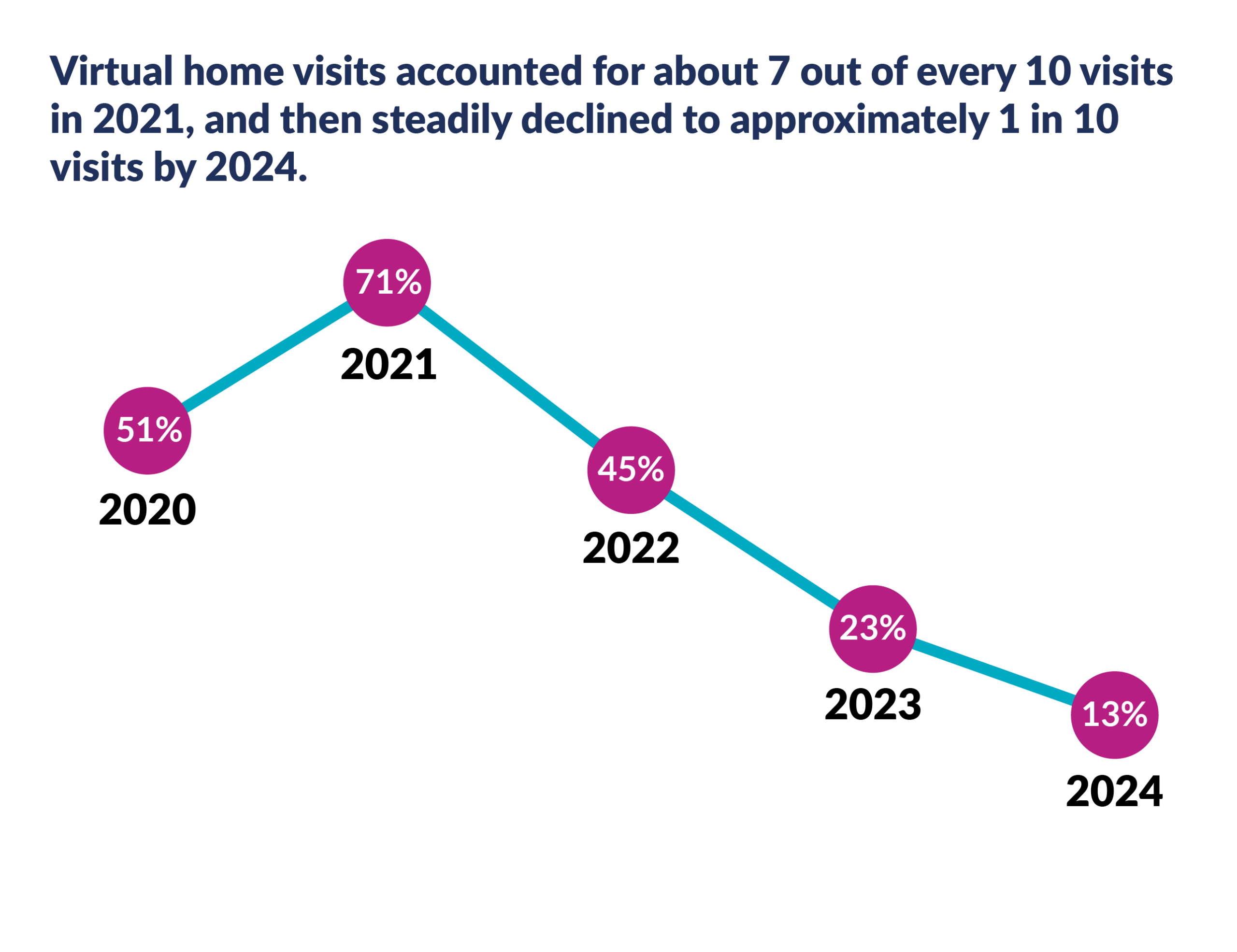
Virtual home visiting has not disappeared but rather evolved as a flexible tool that programs use to accommodate family schedules, increase access in rural and hard-to-reach areas, maintain continuity during illness or other disruptions, and support families who prefer a hybrid approach. More models and states now have the infrastructure to report virtual visit data, and researchers are studying the effectiveness of virtual service delivery to understand when and for whom it works best.
Takeaways
- Home visiting programs were already innovating and experimenting with technology before 2020, to reduce service barriers related to geography, transportation, and scheduling.
- Building on early innovations using technology, models and states rapidly innovated and scaled virtual visits as COVID‑19 accelerated the need for virtual service delivery.
- Virtual home visiting remains a flexible option for programs to meet families’ needs and maintain continuity of care.
- Models and states have expanded their data collection infrastructure to capture virtual visit data that offer new insights into services; researchers are building on this data to explore when and how virtual delivery is most effective.
Conclusion
The past 10 years of coordinated national data reveal a field that is broader, more adaptive, and more grounded in evidence than ever before. Together, these insights show how home visiting has expanded its models, strengthened its presence in tribal communities, and embraced technology to meet families where they are. With this foundation in place, the next data stories will take a closer look at one of the most significant shifts of the past decade: the expansion of home visiting’s geographic reach and what it means for families and communities across the country.
More Then and Now