
Mother measuring daughter's height and marking it on wall at home.
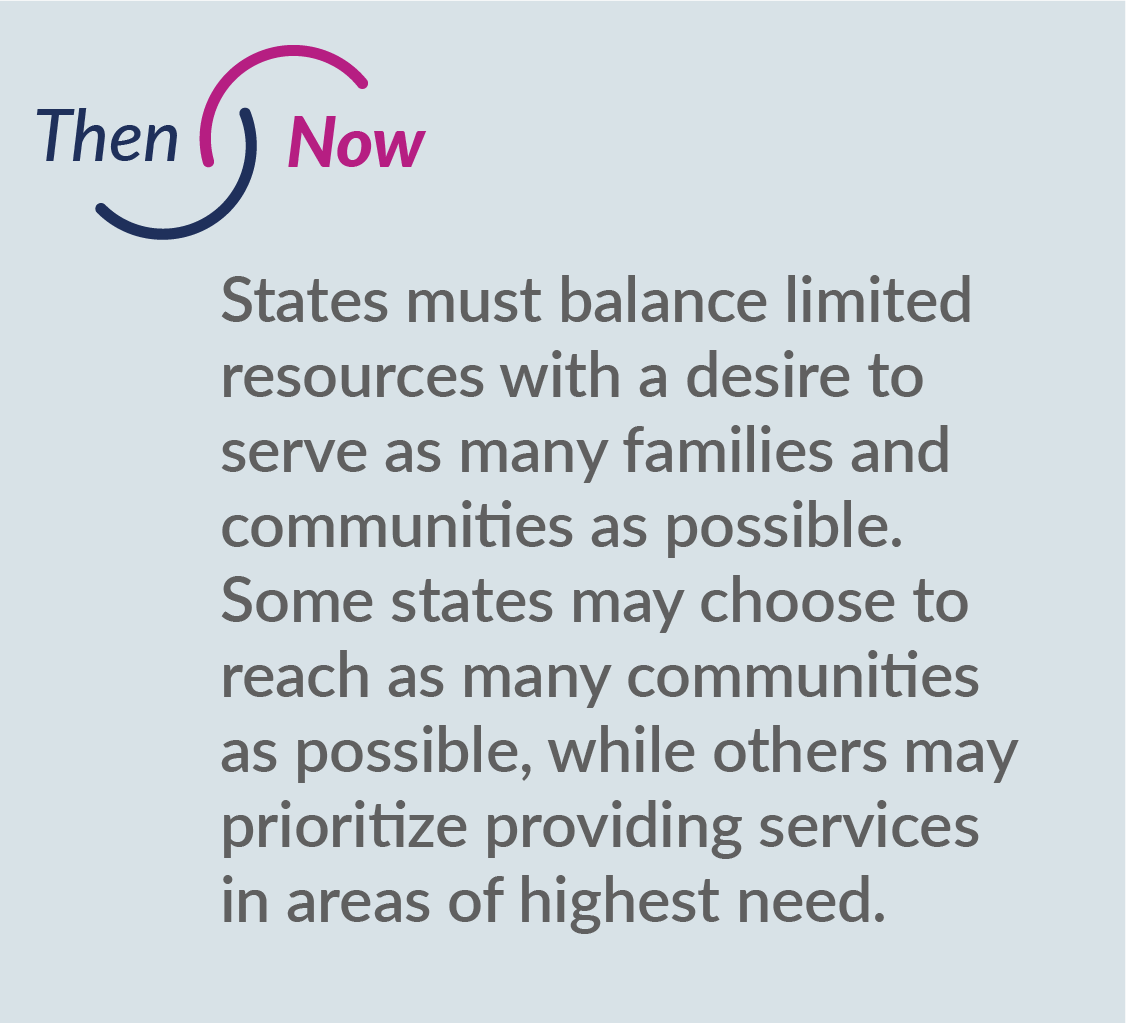 Evidence-based home visiting programs operate in all 50 states, the District of Columbia, and 5 U.S. territories. Over the past decade, the number of counties in which home visiting programs are located has expanded greatly. Home visiting programs provide the local infrastructure to make service delivery possible, serving as community-based hubs from which trained staff can travel to meet families where they live. Examining program locations therefore helps us understand the roots of the home visiting system and its potential capacity to serve families beyond those areas.
Insight 1. The Geographic Footprint of Home Visiting Programs Is Growing
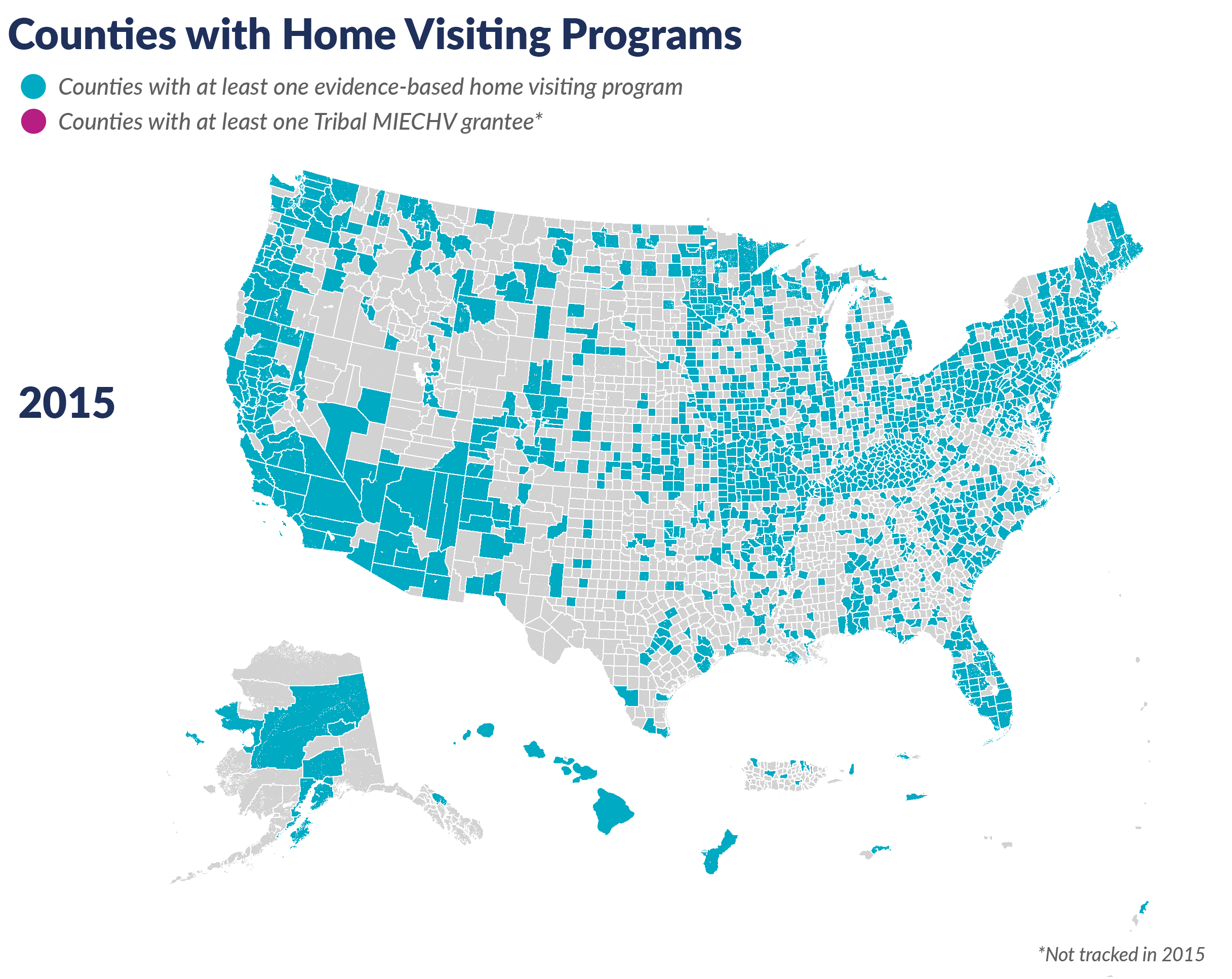
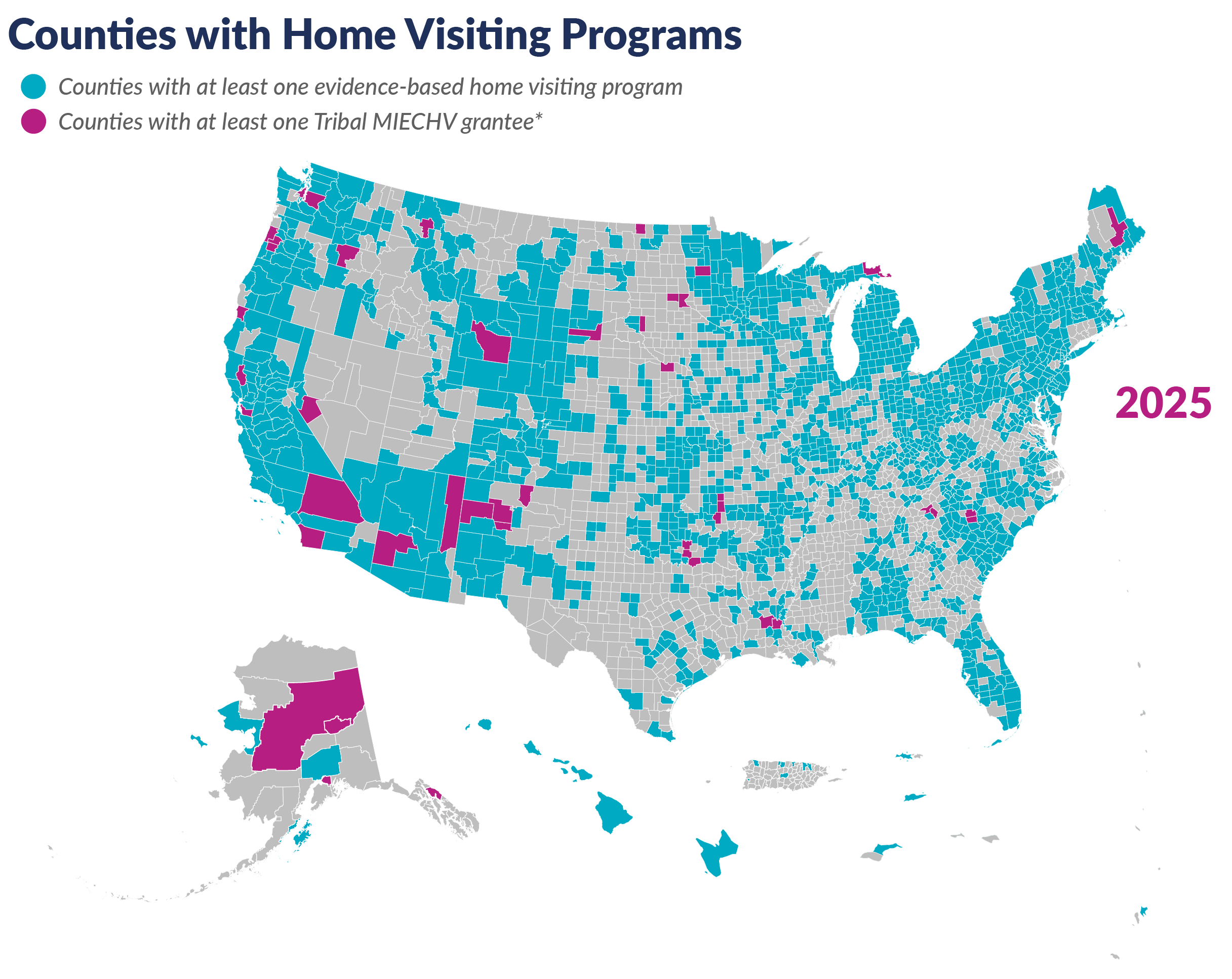
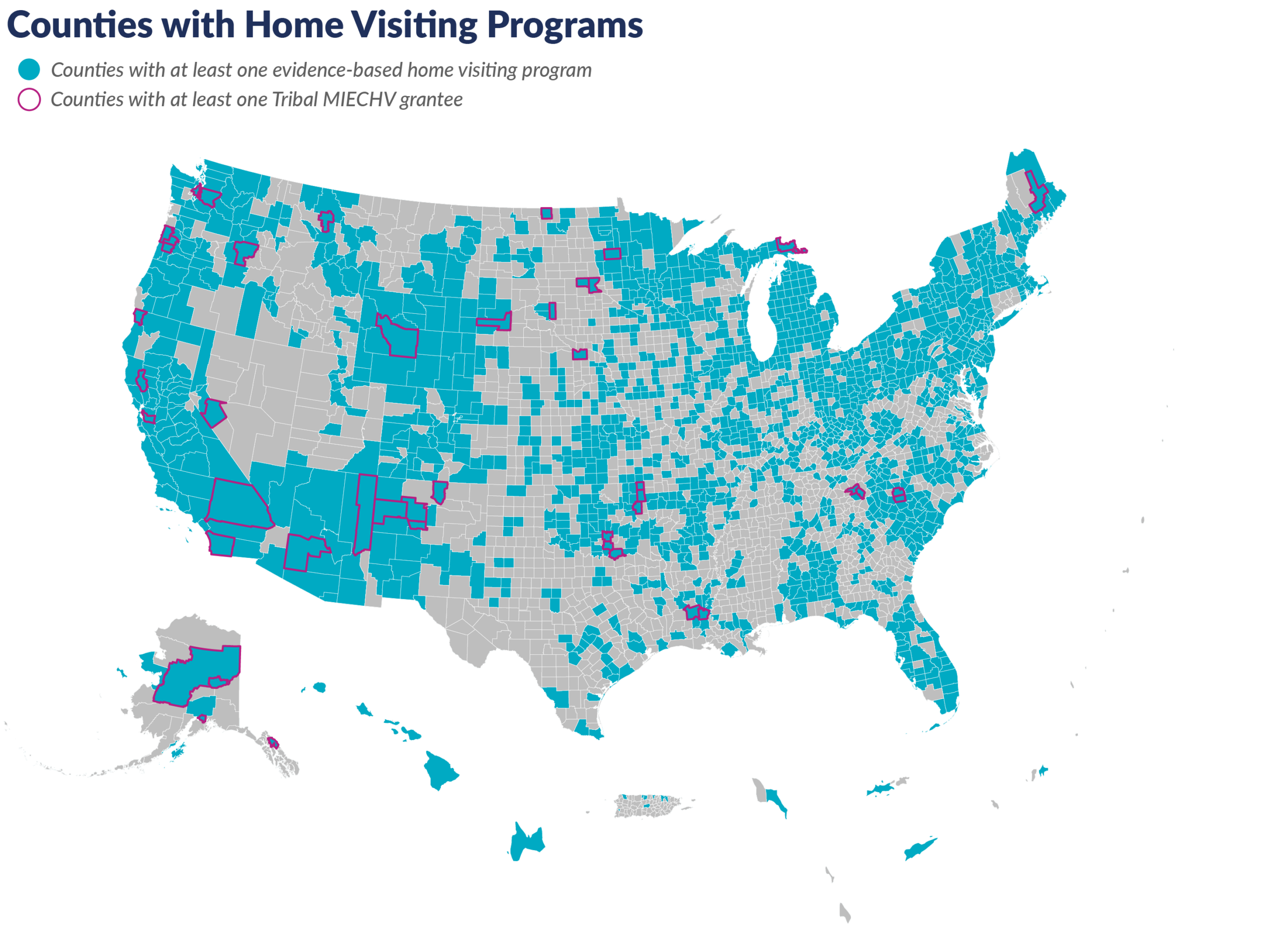
The nationwide reach of home visiting reflects widespread growth. In 2015, 40 percent of U.S. counties were served by at least one evidence-based local home visiting program. By 2025, over 51 percent of counties had access to a local program. This expansion occurred nationwide, with 39 states serving more counties in 2025 than they did a decade earlier.
Insight 2. Home Visiting Programs Are Located in Areas of High Need With Room for Growth
Home visiting programs are often located in areas with fewer resources—such as rural counties, maternal care deserts, and counties with very low access to health resources—delivering health screenings, parenting information, and other critical support directly to families who face barriers to care.
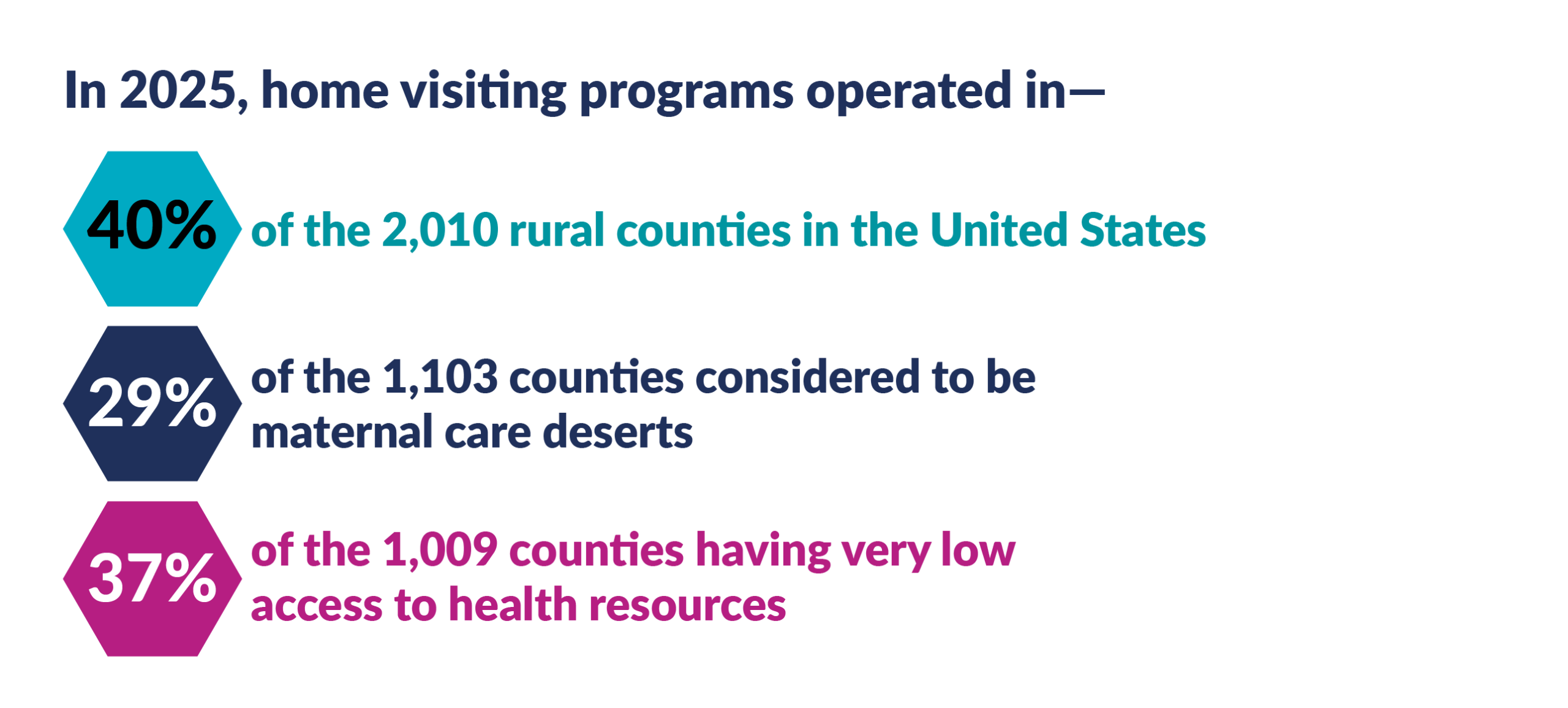
Service gaps remain despite this progress, highlighting opportunities to further expand home visiting services and reach more families in underserved communities.
Insight 3. Home Visiting’s Reach Extends Beyond the Physical Location of Programs by Serving Families in Surrounding Communities
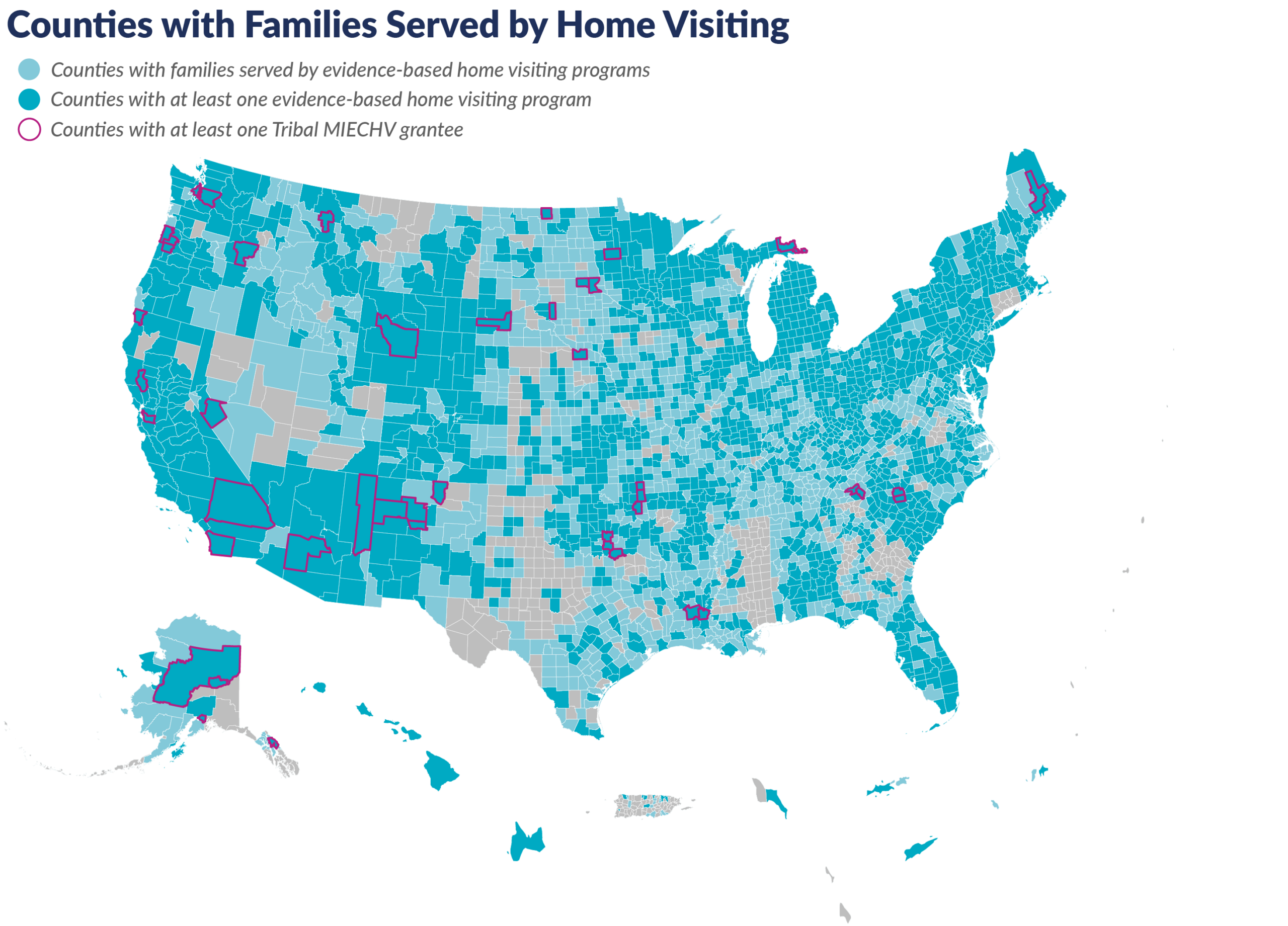
Because home visitors travel near and far to deliver services, programs’ physical location only tells part of the story of home visiting’s reach. Home visiting programs serve families in areas surrounding local programs, reaching families in an estimated 85 percent of U.S. counties in 2025 despite being located in only 51 percent of counties.
Conclusion
Home visiting’s presence has grown in the past decade from a somewhat limited footprint in 2015, to more than half of U.S. counties in 2025. Many factors have potentially contributed to expanded geographic coverage, including strengthened MIECHV funding and an increasing number of models recognized as evidence based (and thus, qualifying for funding). Home visiting programs serve as community-based hubs providing the local infrastructure to make service delivery possible, particularly in areas with barriers to services like prenatal care. Knowing programs’ physical locations tells an important part of the story, but we also know that home visitors reach families well beyond their centralized hub. Even as the field continues reaching into new areas, opportunities remain to close existing gaps in service and to reach communities most in need.
More Then and Now